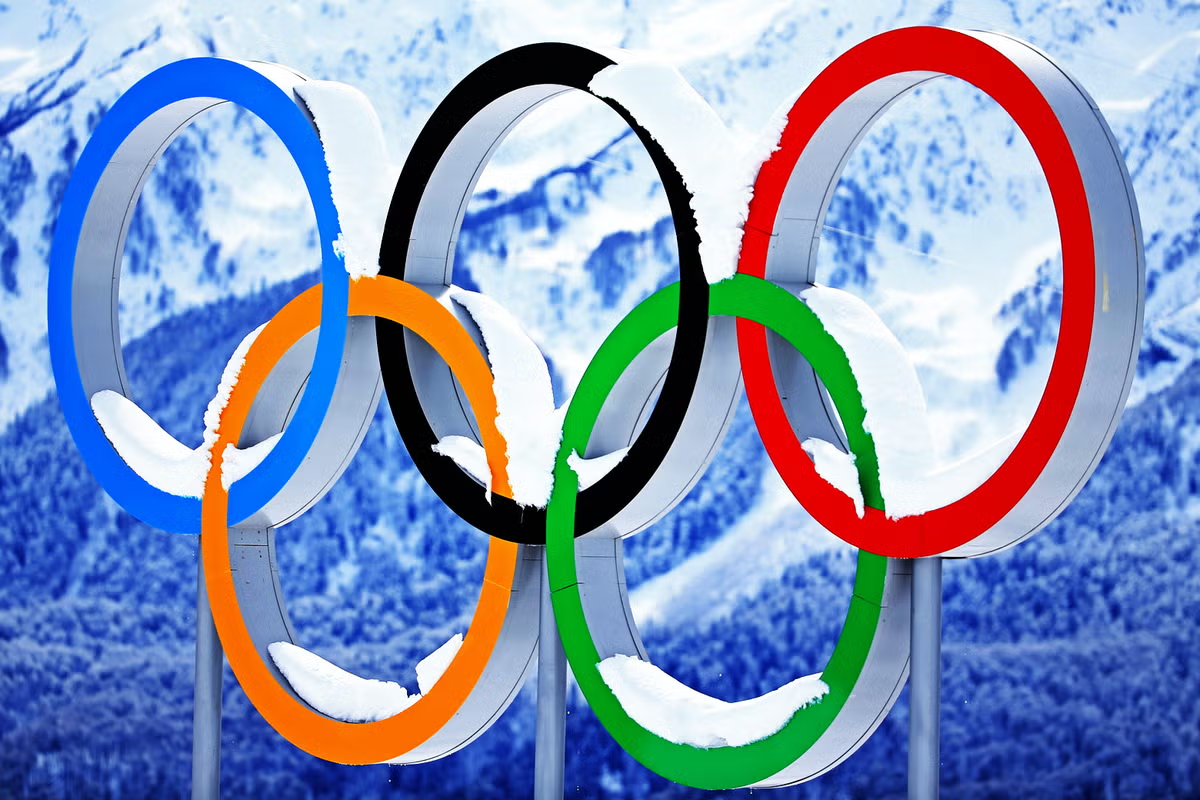
The Olympic Games represent the highest expression of global sport, a rare moment when competition gives way to unity, and the world gathers to celebrate human excellence, resilience, and ambition. Every four years, athletes from nearly every nation march under their flags, while one host country steps into the global spotlight, welcoming billions of eyes and decades of history onto its soil.
Since the modern Olympic Games were revived in 1896, hosting the Olympics has been both an honor and a responsibility reserved for a select group of nations. In this complete guide, we explore every country that has hosted the Olympic Games, covering both the Summer and Winter Olympics. We’ll highlight repeat hosts, historic firsts, regional milestones, and fascinating Olympic facts, offering a clear, chronological look at how the Games have traveled the world and shaped sporting history.
A Brief History of the Olympic Games
The modern Olympic Games were officially revived in 1896 in Athens, Greece, drawing inspiration from the ancient Olympic festivals held in Olympia over 2,700 years ago. What began as a relatively modest international competition has since grown into the largest and most prestigious sporting event in the world, uniting nations through athletic excellence, fair play, and shared global identity.
From just 14 participating countries in 1896, the Olympics have evolved into a truly global spectacle, now featuring thousands of athletes from over 200 nations. Across generations, the Games have mirrored the world itself, surviving wars, political tensions, social change, and technological revolutions while continuing to serve as a symbol of peace, competition, and human potential.
As the Olympic movement expanded, it naturally split into two distinct editions, each with its own character, traditions, and legendary host cities:
- Summer Olympic Games — Featuring globally beloved sports such as athletics, swimming, football, gymnastics, and basketball.
- Winter Olympic Games — Showcasing snow and ice disciplines like skiing, ice hockey, figure skating, and snowboarding.
Together, these two editions form the backbone of Olympic history, creating unforgettable moments, iconic venues, and host cities that remain forever linked to sporting greatness.
Countries That Have Hosted the Summer Olympic Games
The Summer Olympics are the most widely watched global sporting event, featuring sports like athletics, football, swimming, gymnastics, and basketball. Below is a list of countries that have hosted the Summer Olympic Games, arranged chronologically:
Summer Olympics Host Countries
- Greece – 1896, 2004
- France – 1900, 1924, 2024
- United States – 1904, 1932, 1984, 1996
- United Kingdom – 1908, 1948, 2012
- Sweden – 1912
- Belgium – 1920
- Netherlands – 1928
- Germany – 1936
- Finland – 1952
- Australia – 1956, 2000
- Italy – 1960
- Japan – 1964, 2020
- Mexico – 1968
- Canada – 1976
- Soviet Union (USSR) – 1980
- South Korea – 1988
- Spain – 1992
- China – 2008
- Brazil – 2016
Notable Summer Olympics Facts
- The United States has hosted the Summer Olympics more times than any other country.
- Athens 2004 marked the return of the Olympics to their birthplace.
- Tokyo 2020, held in 2021 due to COVID-19, was the first Olympics postponed in peacetime.
Countries That Have Hosted the Winter Olympic Games
The Winter Olympics celebrate sports performed on snow and ice, including skiing, ice hockey, figure skating, and bobsleigh. Since their introduction in 1924, the Winter Games have been hosted primarily by countries with cold climates and mountainous terrain.
Winter Olympics Host Countries
- France – 1924, 1968, 1992
- Switzerland – 1928, 1948
- United States – 1932, 1960, 1980, 2002
- Germany – 1936
- Norway – 1952, 1994
- Italy – 1956, 2006 (2026 upcoming)
- Austria – 1964, 1976
- Japan – 1972, 1998
- Yugoslavia – 1984
- Canada – 1988, 2010
- Russia – 2014
- South Korea – 2018
- China – 2022
Notable Winter Olympics Facts
- Norway is widely regarded as the most successful Winter Olympic nation.
- Beijing 2022 made China the first country to host both the Summer and Winter Olympics.
- Winter Olympics often return to proven hosts due to infrastructure demands.
Why Hosting the Olympics Matters
Hosting the Olympic Games goes far beyond competition and medals, it is a defining national moment. For host countries, the Olympics deliver unmatched global visibility, placing cities and cultures in front of billions of viewers worldwide. Few events offer the same opportunity to shape international perception, tell a national story, and project identity on such a massive stage.
Economically, the Games often act as a catalyst for investment, tourism growth, and long-term development. Host nations typically accelerate infrastructure projects, including transportation networks, stadiums, housing, and urban renewal initiatives that can transform cities for decades. While the costs are significant, the potential legacy, when managed well, can be just as powerful.
Beyond numbers and infrastructure, hosting the Olympics ignites national pride and cultural expression. It gives countries a chance to celebrate their history, creativity, and values while uniting citizens behind a shared global moment. Despite the challenges and scrutiny that come with hosting, many nations still see the Olympic Games as a once-in-a-generation opportunity to redefine their place in the world, and leave a lasting mark on sporting history.