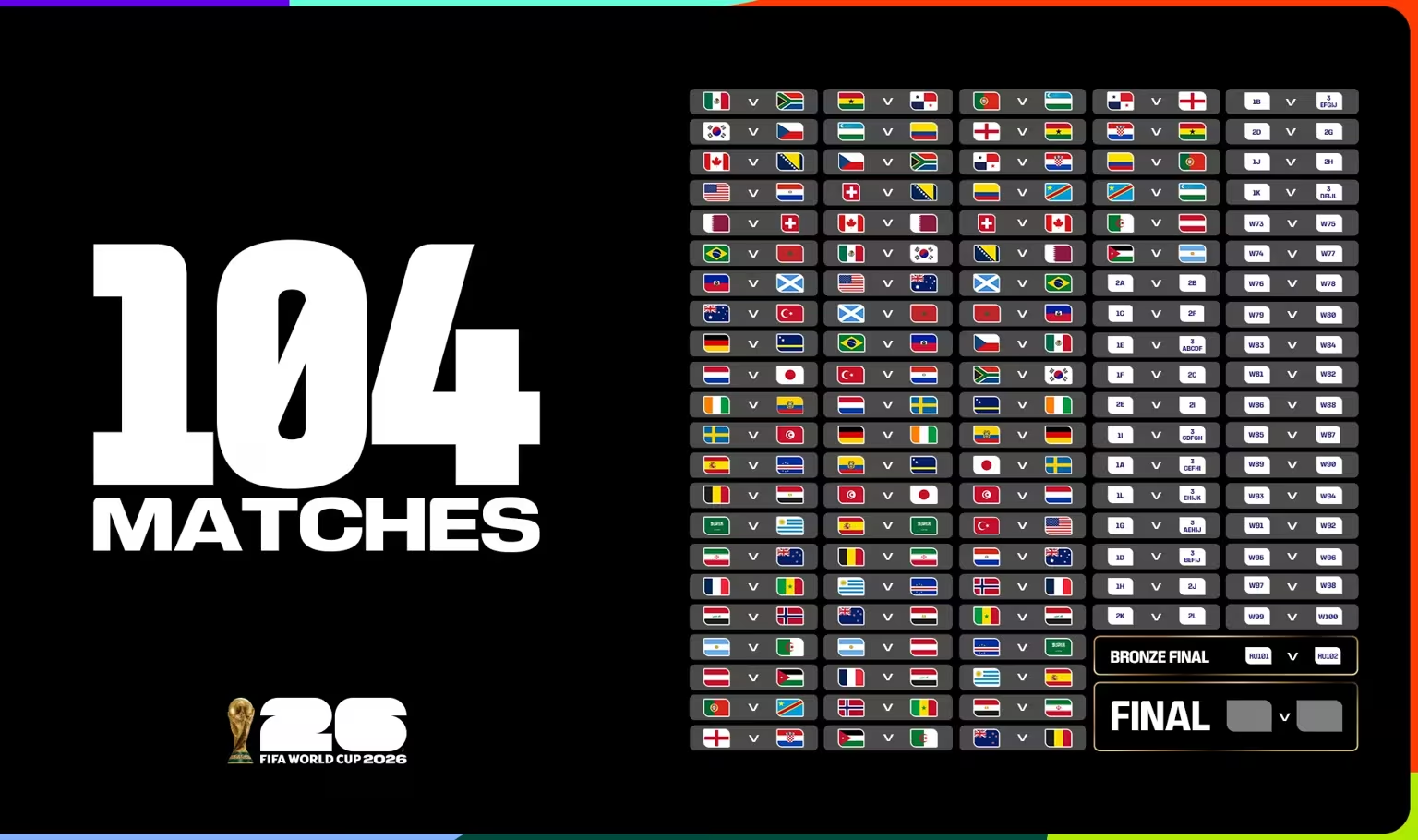
The FIFA World Cup 2026 is set to be the biggest edition in history, hosted across three countries, the United States, Mexico, and Canada. With more teams, more matches, and more venues than ever before, fans around the globe will have more football to enjoy—but also more to keep track of.
One of the biggest challenges for international viewers is time zones. Unlike previous tournaments held in a single region, the 2026 World Cup spans multiple time zones across North America. This means kickoff times will vary depending on where each match is played, making it essential for fans in different parts of the world to convert match times to their local time accurately.
For fans watching from regions like Lagos, London, New York, or Tokyo, understanding the schedule isn’t just about knowing when matches are played—it’s about translating kickoff times into your local timezone, choosing the right streaming platforms, and planning ahead so you never miss key moments, whether it’s group stage fixtures or knockout clashes.
In this guide, we’ll break down everything you need to know about the 2026 World Cup match schedule, including how time zones work, how kickoff times are structured, and the best ways to watch matches live from anywhere in the world.
Why the 2026 Schedule Is Different
The FIFA World Cup 2026 stands out from previous editions because of its expanded format and unique hosting structure across United States, Mexico, and Canada. These factors combine to create a match schedule that is more complex and dynamic than ever before.
Here are the three main reasons why this schedule is different:
- 3 host countries = multiple time zones
Matches will be played across different time zones in North America, meaning kickoff times will not be uniform. A game scheduled in one region may be several hours ahead or behind another. - 16 host cities across North America
With games spread across multiple cities, each venue operates on its local time zone. This results in varying kickoff times depending on the match location, rather than a single standardized daily schedule. - 48 teams = more matches than ever before
The expanded format introduces more group stage games and knockout fixtures, increasing the total number of matches and spreading them across a wider range of time slots.
Unlike previous tournaments hosted in a single country or time zone, match times in 2026 will vary significantly depending on where each game is played. For example, a match in Los Angeles will not kick off at the same local time as one in Toronto, even if they fall on the same day. For global viewers, this makes it especially important to understand time zone differences and convert kickoff times to your local time to stay updated.
Understanding Time Zones (Simple Breakdown)
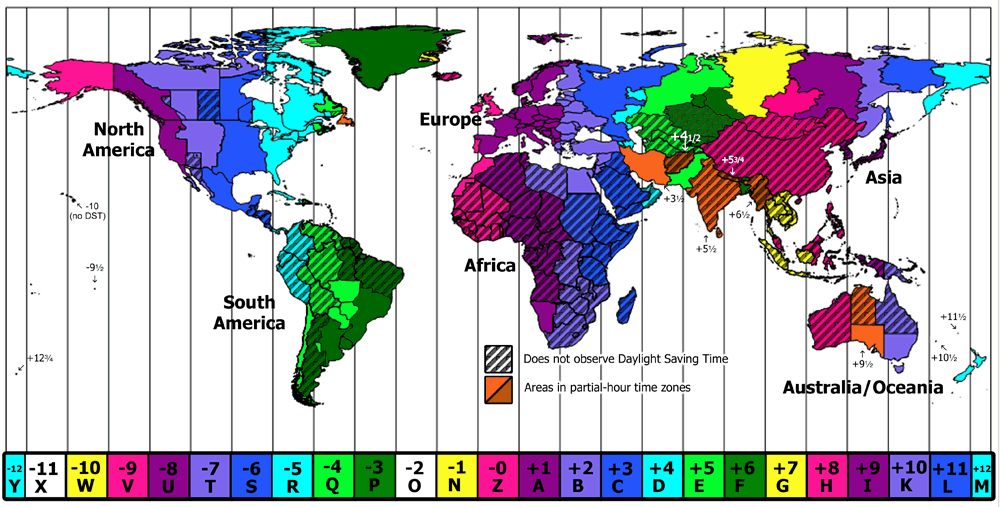
The FIFA World Cup 2026 will be hosted across three countries; United States, Mexico, and Canada, which means matches will be played across multiple time zones. Understanding these time zones is key to knowing exactly when games will kick off in your local time.
Here are the main time zones used across host cities:
- Pacific Time (PT)
Covers cities like Los Angeles, Seattle, and Vancouver. This is the earliest time zone among the host regions. - Mountain Time (MT)
Used in select locations such as Denver. It sits between Pacific Time and Central Time, though it will have fewer matches compared to other zones. - Central Time (CT)
Includes cities like Mexico City, Dallas, and Houston. Many matches are expected to take place in this zone due to the number of host venues. - Eastern Time (ET)
Covers major cities such as New York, Toronto, Miami, and Atlanta. This is the most globally convenient time zone for broadcast audiences.
Key Insight : A significant number of high-profile matches, including many knockout-stage games, are expected to be scheduled in Eastern Time (ET). This is done to maximize global viewership and make it easier for fans across different regions to tune in without extremely late or early kickoff times. Understanding these time zones will help you convert match schedules accurately and avoid missing any important fixtures during the tournament.
Kickoff Time Conversions (2026 World Cup Viewing Guide)
The FIFA World Cup 2026 matches will follow structured kickoff windows across host countries in United States, Mexico, and Canada. Below is how each typical kickoff slot translates into Eastern Time (ET) and major global cities.
1. Early Slot (12:00 PM – 2:00 PM Local Time)
Equivalent in ET:
- 12:00 PM Local (CT/PT/MT varies) → approx 1:00 PM – 3:00 PM ET
Global Conversion (Example: ~1:00–3:00 PM ET)
- 🇬🇧 London → 6:00 PM – 8:00 PM
- 🇫🇷 Paris / 🇩🇪 Berlin / 🇪🇸 Madrid / 🇮🇹 Rome / 🇳🇱 Amsterdam → 7:00 PM – 9:00 PM
- 🇳🇬 Lagos → 6:00 PM – 8:00 PM
- 🇬🇭 Accra → 5:00 PM – 7:00 PM
- 🇿🇦 Johannesburg → 7:00 PM – 9:00 PM
- 🇰🇪 Nairobi → 8:00 PM – 10:00 PM
- 🇵🇹 Lisbon → 6:00 PM – 8:00 PM
Best viewing window globally (evening-friendly for Africa & Europe)
2. Mid Slot (3:00 PM – 6:00 PM Local Time)
Equivalent in ET:
- 3:00 PM Local → approx 4:00 PM – 7:00 PM ET
Global Conversion (Example: ~4:00–7:00 PM ET)
- 🇬🇧 London → 9:00 PM – 12:00 AM
- 🇫🇷 Paris / 🇩🇪 Berlin / 🇪🇸 Madrid / 🇮🇹 Rome / 🇳🇱 Amsterdam → 10:00 PM – 1:00 AM
- 🇳🇬 Lagos → 10:00 PM – 1:00 AM
- 🇬🇭 Accra → 9:00 PM – 12:00 AM
- 🇿🇦 Johannesburg → 11:00 PM – 2:00 AM
- 🇰🇪 Nairobi → 12:00 AM – 3:00 AM
- 🇵🇹 Lisbon → 9:00 PM – 12:00 AM
Late-night for Europe & Africa (common for group-stage matches)
3. Prime Time Slot (7:00 PM – 10:00 PM Local Time)
Equivalent in ET:
- 7:00 PM Local → approx 8:00 PM – 11:00 PM ET
Global Conversion (Example: ~8:00–11:00 PM ET)
- 🇬🇧 London → 1:00 AM – 4:00 AM (next day)
- 🇫🇷 Paris / 🇩🇪 Berlin / 🇪🇸 Madrid / 🇮🇹 Rome / 🇳🇱 Amsterdam → 2:00 AM – 5:00 AM (next day)
- 🇳🇬 Lagos → 1:00 AM – 4:00 AM (next day)
- 🇬🇭 Accra → 12:00 AM – 3:00 AM (next day)
- 🇿🇦 Johannesburg → 2:00 AM – 5:00 AM (next day)
- 🇰🇪 Nairobi → 3:00 AM – 6:00 AM (next day)
- 🇵🇹 Lisbon → 12:00 AM – 3:00 AM (next day)
Late-night / early-morning viewing globally, typically reserved for high-profile matches and global prime-time broadcasts
Key Takeaway for Viewers
Understanding these conversions helps you plan ahead, set reminders, and choose the best matches to watch live without missing key moments of the FIFA World Cup 2026.
- Evening matches in North America (ET) will typically fall late at night or around midnight in Europe
- This means many group stage and knockout matches will require late-night viewing
- Weekend fixtures will be more convenient for live viewing without disrupting work schedules
Smart Tips to Never Miss a Match
Let’s make this practical, here’s how to stay ahead:
1. Use Time Zone Apps
Apps like Google Calendar or World Clock help auto-convert kickoff times.
2. Follow Match Alerts
Turn on notifications from:
- FIFA app
- Sports apps (ESPN, Flashscore, LiveScore)
3. Plan Around Key Matches
- Big games = late nights
- Weekend fixtures = best for full viewing
4. Prioritize Prime-Time Matches
These are usually:
- Biggest teams
- Knockout games
- Must-watch fixtures
Important Things to Expect
- Schedule congestion: More matches = overlapping games
- Late-night fatigue (Africa/Europe): Be ready for midnight football
- Travel impact: Some matches may shift slightly due to logistics
- Knockout rounds: More standardized times for global viewing
Conclusion
The FIFA World Cup 2026 isn’t just expanding the tournament, it’s transforming how fans around the world experience football in real time. With matches spread across multiple time zones and continents, following the action will require a bit more planning than usual.
Yes, the time differences can be challenging.
Yes, some fixtures will demand late nights or early mornings depending on where you live.
But that’s exactly what makes this tournament special.
From midnight kickoffs in Lagos to early morning matches in Australia, this edition truly becomes a 24-hour global football festival, connecting fans across every corner of the world.
One thing is certain, no matter where you are, football will always find a way to bring the world together.